Changes to Employment Law 2026: What Employers Need to Know
27 Feb, 20264 minSignificant reforms under the Employment Rights Act 2025 (ERA) will begin to take effect fro...


Significant reforms under the Employment Rights Act 2025 (ERA) will begin to take effect from 6th April 2026.
This will form part of the UK Government’s wider Plan to Make Work Pay.
These updates follow the release of the Employment Rights Bill back in October 2024. The changes intend to strengthen worker protections, expand day‑one rights, and modernise employment practices across the UK. While some measures will roll out over time, several headline changes will start affecting employers from early April.
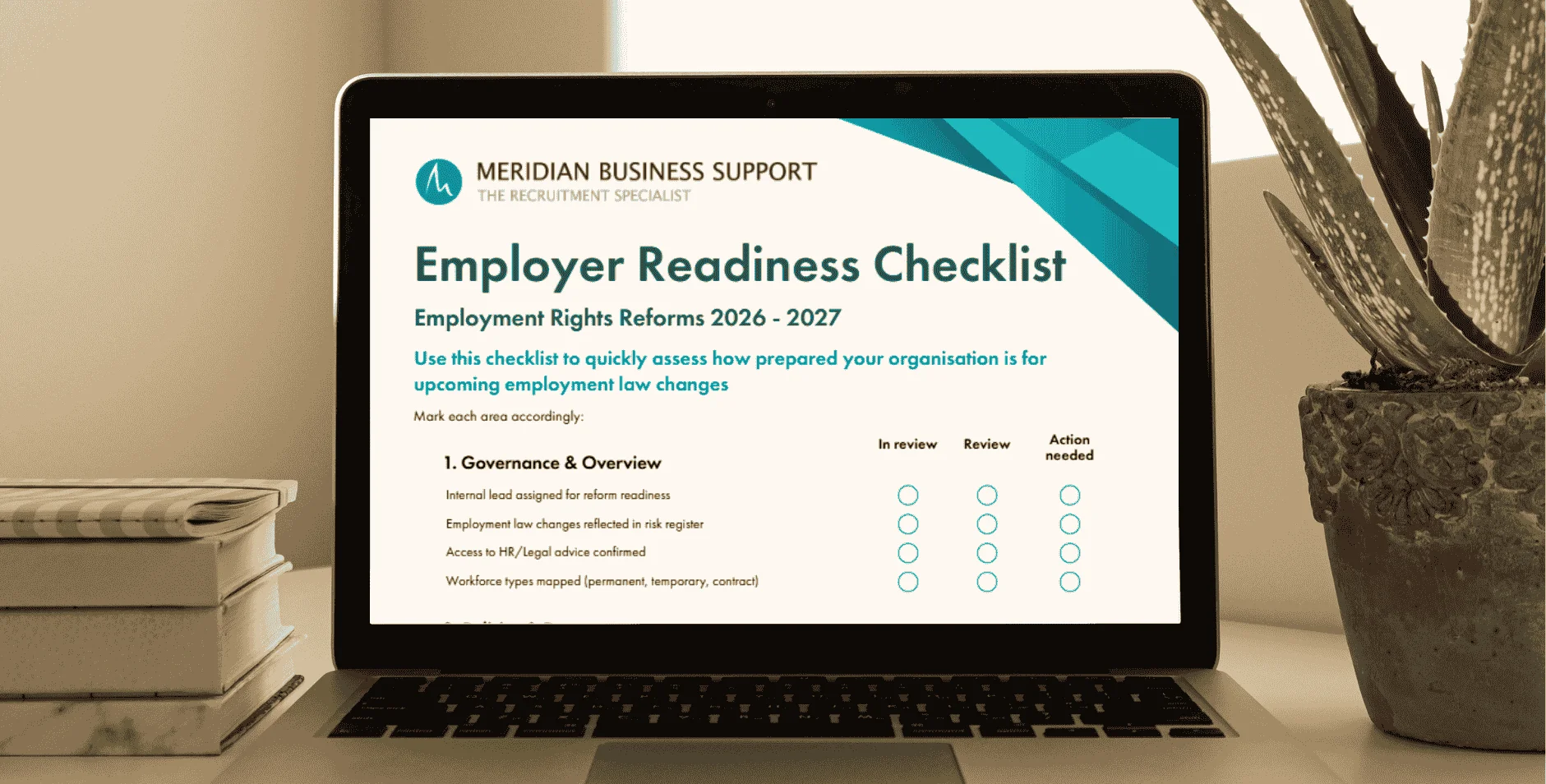
We know that these reforms can feel overwhelming, especially when so much is changing at once. That’s why we’ve pulled together a simple summary to help you understand what’s coming and what it means for you and your teams.
Here's a quick overview of some changes that employers should have on their radar.
Key changes:
1. Expansion of Day‑One Rights
Several family and sickness-related entitlements will become available from an employee’s first day of service:
Statutory Sick Pay (SSP)
- From 6th April 2026, SSP will be payable from day one of sickness absence. The current three‑day waiting period will be removed and the Lower Earnings Limit will be abolished. This broadens the eligibility for lower‑paid and part‑time workers.
Example: If someone calls in sick on their first day, SSP applies immediately. There’s no waiting period, and they don’t need to meet any minimum earnings threshold
Paternity Leave & Unpaid Parental Leave
- The previous 26‑week (for paternity) and one‑year (for unpaid parental leave) qualifying periods will be removed. This means both become day‑one rights for employees. Notice requirements also change ahead of the 6th April effective date.
Example: If a new starter becomes a parent during their first weeks with you, they’ll be able to take paternity leave immediately. Under the old rules, they would have had to wait 26 weeks before qualifying — so this is a big shift in how quickly employees can access support.
Right to Request Flexible Working
- Employees will have the right to request flexible working from day one. This reinforces earlier reforms and aligns with the broader agenda for modernisation. (Note: Government consultation on flexible working access remains ongoing.)
Example: If someone joins your team and needs adjusted hours from the outset (for childcare, study, or caring responsibilities), they can now submit a flexible working request on day one, rather than waiting months to become eligible.
2. Extended Whistleblowing Protections
Workers who whistleblow on issues including sexual harassment will benefit from strengthened protections against detriment or dismissal. This forms part of the Employment Rights Act’s wider commitment to safeguarding workplace fairness.
3. Introduction of the Fair Work Agency
A new Fair Work Agency (FWA) will be set up to help enforce statutory rights and make compliance easier for businesses. The FWA will bring together the HMRC National Minimum Wage enforcement team, the Gangmasters and Labour Abuse Authority (GLAA), and The Employment Agency Standards Inspectorate (EASI). The agency will launch in April 2026, though its powers and responsibilities will be rolled out in stages.
4. Compensation for Shift Cancellation
As part of the zero-hours contract reforms, new provisions will introduce compensation requirements for late shift cancellations. The zero-hour contract reforms sit under the ERA umbrella. Agencies will also gain clearer routes for recovering these costs from clients. (Details subject to further government guidance.)
(Supported by ongoing consultations on modernising agency worker regulation.)
Example: If a worker is scheduled for a shift and it’s cancelled late in the day, they’ll be entitled to compensation for the lost work. Agencies will then be able to recover those costs from clients where appropriate.
5. Joint & Several Liability (JSL)
Updates to Joint & Several Liability are expected and will reinforce accountability across supply chains, particularly relevant for agencies and businesses that rely on outsourced labour. This forms part of the wider framework that is being strengthened under the Employment Rights Act timeline.
Timeline Reforms
The Government’s updated Employment Rights Act implementation plan confirms that major reforms will begin on 6th April 2026. Additional measures will be phased in later throughout 2026 and 2027.
Some reforms, including changes to unfair dismissal qualifying periods and “fire and rehire” regulations, have been delayed to 2027. The measures scheduled for April 2026 remain on track.
The Government has adopted a staggered approach, giving employers time to prepare for the changes ahead. As you work through these adjustments, whether in HR, payroll, or day‑to‑day people management, we’re here to help you make sense of each step.
What Is Confirmed vs What Is Expected
Confirmed for 6 April 2026
- Day‑one rights: SSP, paternity leave, unpaid parental leave
- Day‑one right to request flexible working
- Strengthened whistleblowing protections
- Fair Work Agency initial launch
- Collective redundancy protective award changes
- Shift‑cancellation compensation rules (details pending final guidance)
Expected / Pending Further Government Guidance
- Detailed operational guidance for the Fair Work Agency
- Specifics on agency‑work enforcement under JSL
- Full requirements for shift cancellation compensation
- Further updates to flexible working regulations
- Additional ERA 2027 measures, including "fire and rehire" enforcement rules and unfair dismissal changes
Key Risks for Employers
The April 2026 reforms create several operational and financial risks you should monitor:
- Increased financial exposure
Day‑one SSP, additional family leave rights, and extended redundancy may lead to higher absence‑related and compliance costs. - Process compliance pressure
Stricter leave rights and whistleblowing protections increase the risk of disputes if internal processes are outdated or inconsistently applied. - Agency worker liability
New rules on shift‑cancellation compensation and Joint & Several Liability (JSL) will create extra responsibilities for agencies and clients. These responsibilities will be especially important where scheduling or supply‑chain oversight is weak. - Enforcement and scrutiny
With the Fair Work Agency being phased in, enforcement will gradually become more centralised and proactive.
What Employers Should Do Now
While many of these reforms may sound complex, you don’t need to tackle everything at once. This is a journey we’re going through together, and small steps now will make the transition far smoother when April arrives.
We recommend that organisations:
- Review internal policies around sickness, flexible working, and family leave.
- Begin planning for updated payroll and absence reporting processes.
- Stay alert to upcoming government consultations and guidance.
- Follow Meridian for updates. We’ll be sharing more insights as each reform area develops.
These changes represent a major shift in employment rights across the UK. Early preparation will help businesses navigate the transition smoothly.
Join our LinkedIn community to stay informed on Employment Law changes, connect with peers, and share experiences as the reforms roll out: Meridian Recruitment Matters.
Resources
- https://www.gov.uk/government/publications/implementing-the-plan-to-make-work-pay-and-employment-rights-act/plan-to-make-work-pay-and-employment-rights-act-timeline-update
- https://www.davidsonmorris.com/april-2026-era-2025-changes/
- https://www.att.org.uk/employers/welcome-employer-focus/uk-employment-rights-bill-changes-becoming-effective-6-april-2026
- https://www.business.gov.uk/campaign/employment-changes/